
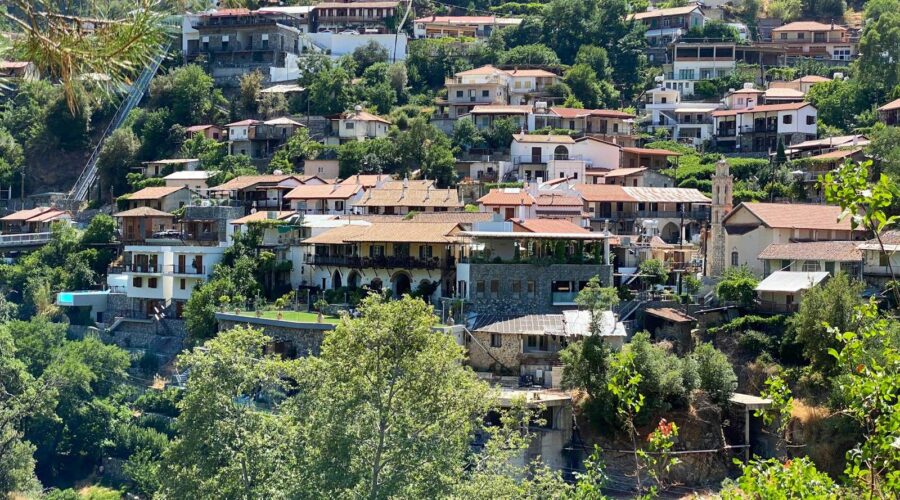
Nicosia
Step through the Venetian walls encircling Nicosia’s old city and you’ll find yourself in Europe’s last divided capital—a place where east meets west along a weathered green line, where Byzantine churches share skylines with Ottoman minarets, and where the weight of history feels less like a museum exhibit and more like a living conversation. This isn’t the Cyprus of beach resorts and package holidays. Nicosia sits inland, away from the Mediterranean glitz, offering something rarer: an unvarnished glimpse into Cypriot identity shaped by centuries of empires, conflict, and coexistence. The city’s heart beats strongest in its contradictions—modern cafés occupy medieval buildings, United Nations peacekeepers patrol streets lined with traditional coffee houses, and you can cross from one country to another simply by walking through a checkpoint. For travelers seeking cultural complexity over postcard simplicity, Nicosia rewards curiosity with authenticity.
Spring and autumn deliver Nicosia at its most welcoming. March through May brings wildflowers to the surrounding Mesaoria plain and temperatures hovering comfortably between 18-25°C, perfect for wandering the old quarter’s labyrinthine streets without breaking a sweat. Autumn, particularly September through November, offers similar conditions with the added benefit of harvest season—when local markets overflow with pomegranates, figs, and fresh halloumi. Summer can be punishing. June through August regularly sees temperatures climbing past 40°C, turning afternoon sightseeing into an endurance test. Locals retreat indoors during midday hours, and you should too.
Winter (December to February) remains mild by northern European standards but brings occasional rain and cooler evenings that dip to 5°C. Tourist numbers drop dramatically during winter months, which means authentic interactions and better prices, though some attractions keep reduced hours. If you’re planning around festivals, Orthodox Easter celebrations in spring transform the southern part of the city with candlelit processions and traditional feasts, while Ramadan observances in the north create their own rhythms of fasting and evening celebration. Avoid peak August if possible—locals who can escape the heat do, and many family-run establishments close for holidays.
Begin your exploration at the Green Line itself, the buffer zone controlled by UN forces since 1974 that slices through the old city like a scar you can touch. Ledra Street crossing point allows pedestrians to move freely between the Greek Cypriot south and Turkish Cypriot north—bring your passport and prepare for the strange experience of crossing international borders on foot within a single city center. The south side anchors itself around Laiki Geitonia, a restored neighborhood where stone houses and bougainvillea-draped courtyards house craft workshops and traditional tavernas. The Leventis Municipal Museum here tells Nicosia’s story through artifacts spanning 4,500 years, but the real education happens simply by walking and observing.
Cross to the north and you’ll find the Büyük Han, a magnificent caravanserai from 1572 that once sheltered silk road merchants and now holds artist studios and a peaceful courtyard café. The Selimiye Mosque, originally the Gothic Cathedral of Saint Sophia, stands as physical evidence of the island’s layered past—its flying buttresses and rose windows topped with Ottoman minarets. Few tourists venture to the Arab Ahmet district northeast of the mosque, where crumbling mansions and neighborhood bakeries reveal daily life largely unchanged for decades. For a perspective most visitors miss entirely, climb the Shacolas Tower Observatory on Ledra Street just before crossing—the rooftop view across both sides of the divided city contextualizes everything you’ll see at ground level.
The Cyprus Museum deserves half a day minimum. Its collection of ancient sculptures, mosaics, and artifacts from Neolithic settlements through Roman Cyprus remains unmatched anywhere else on the island.
Nicosia’s food culture reflects its position at a crossroads. In the south, hunt down traditional meze spreads featuring tava (slow-cooked lamb), kolokasi (taro root stew), and molohiya (a distinctive green soup that locals either love or avoid). Zanettos Tavern near Chrysaliniotissa has served these classics since 1938. Halloumi appears everywhere—grilled, fried, fresh—but the best comes from small producers at the municipal market. In the north, seek out kebabs from wood-fired grills, börek pastries layered with cheese or meat, and the Ottoman-influenced sweets like baklava and künefe.
The city’s coffee culture runs deep on both sides. Greek coffee houses in the south and Turkish kahvehane in the north serve as social anchors where men (traditionally) spend hours over thimble-sized cups and backgammon boards. For something more contemporary, the Chrysaliniotissa Craft Centre area has sprouted excellent specialty coffee spots. Don’t leave without trying commandaria, Cyprus’s ancient dessert wine—produced since 800 BCE, it may be the world’s oldest named wine still in production.
The old city within the Venetian walls offers the most atmospheric accommodation, with restored townhouses now operating as boutique guesthouses placing you steps from major sites. North Nicosia’s Arabahmet neighborhood provides quieter, often cheaper options with Ottoman-era charm. If you prefer modern amenities, the newer districts south of the walls around Makarios Avenue have international hotels and better transport connections. Choose based on which side of the divide you want to wake up in—though with the crossing points now open, you’re never far from either.